
French casement windows have two side-hinged sashes that open outward from the center, much like a pair of doors. Unlike a standard two-window setup, there’s no fixed center post blocking the view. When both sashes are open, you get a wide opening that lets in plenty of fresh air and makes the outside view feel more open. When closed, the design still gives the room a clean, balanced look while allowing plenty of natural light inside.
What Are French Casement Windows?
A French casement window is a two-sash casement window that opens outward from the center. Both sashes are side-hinged, so they swing open without a fixed post between them. This gives French casement designs a wider, cleaner opening than many standard casement windows.
In simple terms, what is a French casement window? It’s basically a two-sash casement setup made to open from the middle. The result is a clear view, good airflow, and an easy way to bring more of the outdoors into a room.
How Do French Casement Windows Work?
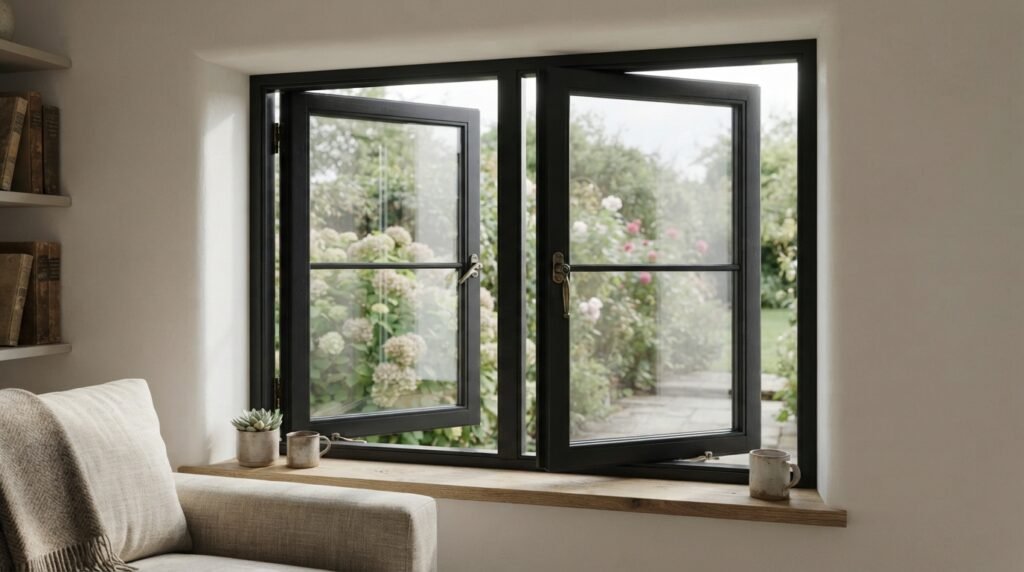
French casement windows work with two side-hinged sashes that swing outward from the center. Think of them as double casement windows working together. Depending on the design, a crank window mechanism or push-out hardware moves the operating sash, while the secondary sash follows or unlocks to open the full window.
Unlike many hinged windows with a single opening section, this setup creates a much wider opening. The window sash moves away from the frame, letting more air in through the opening.
What Is a Floating or Flying Mullion?
A floating mullion is the part where the two sashes meet without a permanent center post. In a traditional double casement window, a fixed center post can sit between the two sides. With this design, the meeting point moves with the sashes instead.
When the primary sash and secondary sash are opened, that center obstruction moves out of the way. That’s why these windows that open outward can give you a much clearer view and a more open feel when fully opened.
What Makes This Window Design Different?
The main difference comes down to how many sashes open and what sits between them. A single casement window has one sash that swings outward, while double casement or casement double windows have two sections working side by side.
With a French casement setup, both sashes open from the center, so there’s no permanent center post blocking the middle. That small design change makes a noticeable difference. You get a wider opening, a cleaner view, and better airflow compared with some standard casement windows with a fixed center section.
Benefits of French Casement Windows
This window style has a few practical perks beyond its clean look. The biggest ones are the open view, strong airflow, easy operation, and good energy performance when the window is well made and installed properly.
Wider, Unobstructed Views
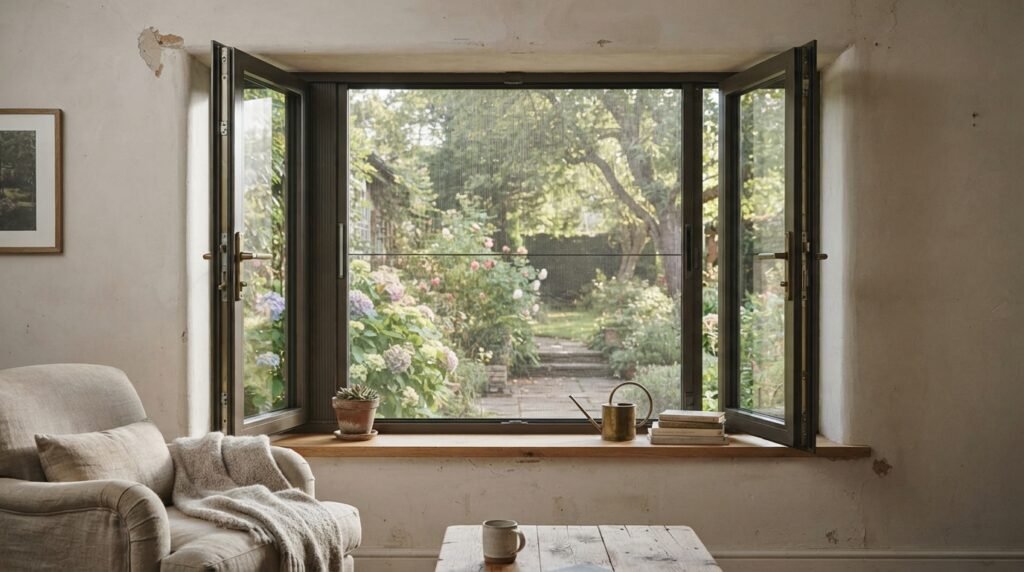
Without a fixed center mullion dividing the two sides, you get a more unobstructed view of the outdoors. The large glass area also brings in plenty of natural light, making large casement windows a nice choice for rooms facing a garden, yard, or scenic area.
Better Ventilation
Because the sashes swing outward, a large part of the window can open up at once. These windows that open out can bring in a good amount of fresh air, while windows that open outward can also help direct airflow into the room.
Easy Operation
A crank window is simple to operate, especially when the window is above a kitchen counter or sink. Crank out windows and crank out casement windows can be opened without leaning over furniture. Some designs also use push out windows or push out casement windows for a more traditional feel.
Energy Efficiency
Well-built energy efficient casement windows can help reduce drafts because the sash presses against the frame when closed. A good compression seal limits unwanted air leakage, though the final performance also depends on the glass, frame, and quality of installation.
Drawbacks of French Casement Windows
They’re not the right fit for every home, and there are a few things worth knowing before choosing them. They can cost more than simpler window styles, mainly because of the two-sash design and hardware.
The sashes also need enough exterior clearance to swing open. A nearby walkway, deck, fence, or landscaping could get in the way. Screens can be a little trickier too, and the hinges, locks, or crank hardware may need occasional care.
They also aren’t ideal for every opening. Very narrow spaces can limit the design, while exposed locations may need extra attention to wind and rain protection. Proper installation matters as well, since a poor fit can lead to drafts, leaks, or trouble operating the sashes.
French Casement Window Sizes and Configurations
There isn’t one standard size that works for every opening. Casement window sizes can vary by manufacturer, and custom sizing is often available for replacement or new construction projects.
When comparing casement windows sizes, look at the overall casement window width and height, the rough opening, and the space needed for both sashes to swing outward. Large casement windows can provide a wider view, but they also need more room and stronger hardware.
A double casement windows setup normally uses two sashes side by side. The exact dimensions should be based on the existing opening, structural requirements, manufacturer specifications, and local building rules rather than a one-size-fits-all measurement.
What Materials Are Used for French Casement Windows?
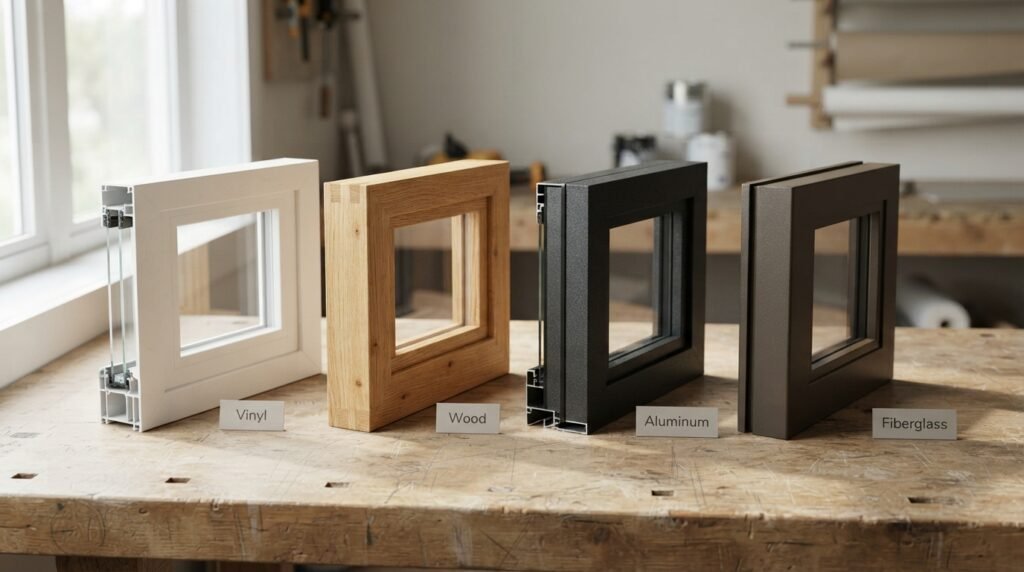
The frame material affects the window’s look, price, upkeep, and overall performance. The most common choices are vinyl, wood, aluminum, and fiberglass, and each one has its own trade-offs.
Vinyl
Vinyl casement windows are popular because they’re fairly low-maintenance and don’t need painting. A vinyl casement window can also offer good insulation at a reasonable price, making it a practical choice for many homes.
Wood
Wood casement windows have a warm, traditional look that works especially well in older or classic-style homes. They can be painted or stained, but they do need more care to protect the wood from moisture and weather.
Aluminum
Aluminum casement windows are strong and can have a slimmer frame profile. They’re often chosen for modern homes, though their thermal performance depends on how the frame is designed and insulated.
Fiberglass
Fiberglass frames are known for their strength and resistance to expansion and contraction. They can handle changing weather well and usually need less maintenance than wood.
| Material | Main advantage | Main drawback |
| Vinyl | Low maintenance | Fewer finish options |
| Wood | Natural, classic look | More upkeep |
| Aluminum | Strong, slim appearance | Can have lower insulation if poorly designed |
| Fiberglass | Durable and stable | Usually costs more than basic vinyl |
Glass Options for French Casement Windows
The glass you choose can make a noticeable difference in comfort and energy use. Double-pane glass is a common choice, while triple-pane glass adds another layer of insulation for homes that need better thermal performance.
Low-E glass helps control heat transfer, while an argon gas fill between the panes can improve insulation. When comparing windows, the U-factor shows how well the glass and frame resist heat flow, while SHGC indicates how much solar heat enters through the glass. A lower U-factor can improve insulation, while the right SHGC depends on your climate and how much sun the window gets.
Do French Casement Windows Have Screens?
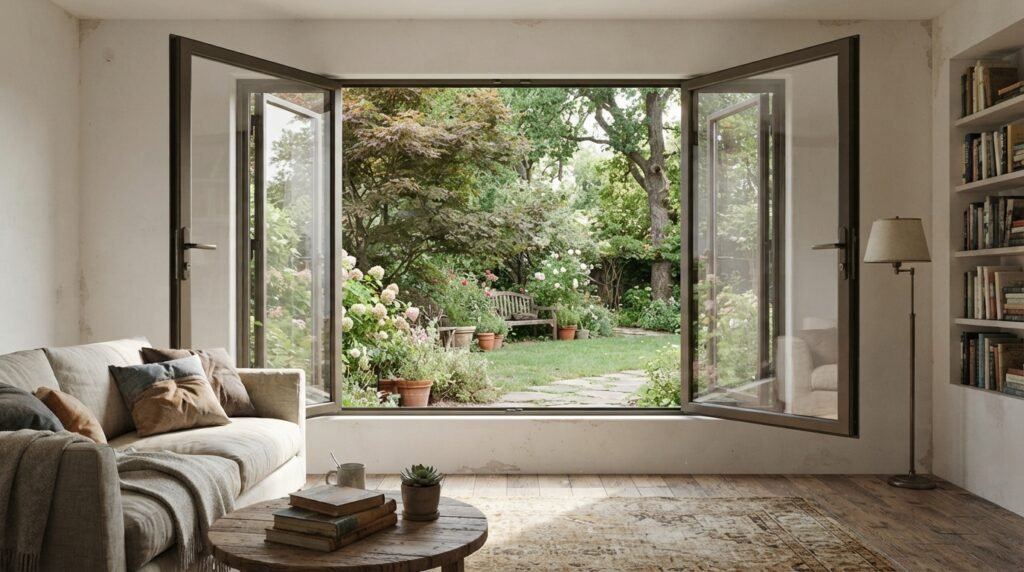
Yes, but the screen setup can be a little different from a standard window. Since the sashes swing outward, a traditional casement screen may not work the same way as a screen on a sliding or double-hung window.
Casement windows with screens can use retractable, roll-down, or hinged screen designs. Crank windows with screens need enough space for the hardware to operate without hitting the screen, while crank out windows with screens may use a screen positioned inside the window frame.
The best screen placement depends on the window design and how it opens. If keeping insects out is important, it’s worth choosing the screen system at the same time as the window rather than trying to add one later.
Are French Casement Windows Energy Efficient?
Yes, they can be. Energy efficient casement windows usually create a tight compression seal when closed, which helps limit unwanted air leakage around the sash and frame.
The final performance also depends on the glass, frame material, and installation quality. Double- or triple-pane glass with Low-E coating and argon gas can improve insulation. When comparing options, check the U-factor to see how well the window resists heat flow. A well-made window won’t perform as intended if it’s poorly installed.
Are French Casement Windows Secure?
They can be quite secure when the whole window system is properly designed. Multi-point locking can hold the sashes firmly at several points, while strong hardware and a sturdy frame add another layer of protection.
The glass matters too, especially for ground-floor windows. Still, security isn’t just about the lock or the window style. The frame, glass, hardware, locking points, and installation all play a part.
Can a French Casement Window Be Used for Egress?
Yes, some configurations can meet egress requirements, but you can’t assume every French casement window qualifies. The important factor is the clear opening available when the window is fully open.
Requirements can depend on the window’s width, height, opening area, location, and local building code. Bedrooms and basement rooms may have specific egress rules, so check the requirements that apply to your home before choosing a particular window size or configuration.
Best Rooms for French Casement Windows
Kitchen
Casement kitchen windows work especially well above a sink or countertop. A kitchen casement window is easy to reach and open, while the wide opening can help clear cooking heat and odors.
Living Room
In a living room, the wide glass area can bring in plenty of natural light and give you a better view of the yard or garden. They also work nicely when you want the room to feel more connected to the outdoors.
Bedroom
Bedrooms can benefit from the airflow these windows provide. You can open the sashes to bring in a breeze without giving up much wall space inside the room.
Sunroom
A sunroom is a natural fit for this style. The large glass area keeps the space bright, while the outward-opening sashes make it easy to bring in fresh air on pleasant days.
French Casement Windows vs Standard Casement Windows
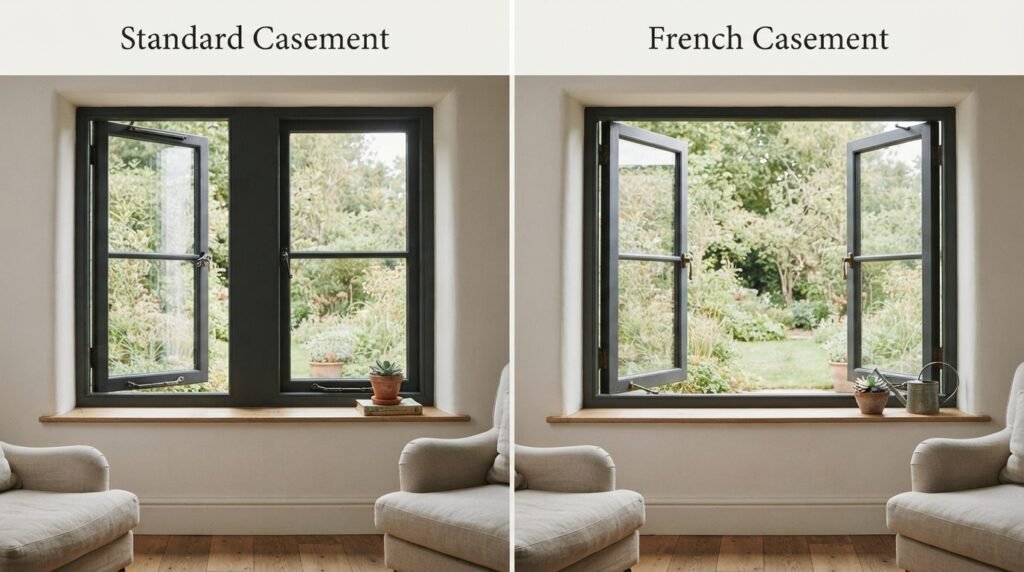
So, what is the difference between casement and French casement windows? The biggest difference is the number and arrangement of the sashes. A standard casement usually has one operating sash, while a French setup uses two sashes that meet in the center and open outward.
| Feature | Standard Casement | French Casement |
| Sashes | Usually one | Two |
| Opening | One side | Opens from center |
| Center obstruction | May have one | No fixed center post |
| View | Good | Wider, unobstructed |
| Ventilation | Excellent | Excellent |
| Operation | Crank or push | Crank or push |
| Exterior clearance | Required | More clearance may be needed |
French Casement Windows vs Double Casement Windows
The terms double casement windows and double casement window can be confusing because different manufacturers don’t always use them in exactly the same way. In some cases, double casement simply means two casement sashes installed side by side.
That’s why it’s better to look at the actual design. If the two sashes open from the center and don’t have a permanent center post between them, you’re looking at the configuration commonly associated with French casement windows.
How Much Do French Casement Windows Cost?
Wondering how much do French casement windows cost? There isn’t one fixed price. Casement window cost can change quite a bit depending on the project.
The main things that affect casement window prices and overall casement windows cost include:
- Frame material: Vinyl is usually more affordable than wood or fiberglass.
- Size: Larger windows generally cost more.
- Glass: Double-pane, triple-pane, Low-E, and specialty glass can change the price.
- Hardware: Cranks, locks, and other hardware add to the total.
- Customization: Unusual sizes, colors, grids, or finishes can raise the cost.
- Installation: Labor and installation difficulty matter.
- Old window removal: Replacement projects may include removal and disposal.
- Location: Local labor rates can make a noticeable difference.
So, are casement windows more expensive? They can be, especially when you choose larger sizes, premium materials, or custom hardware.
French Casement Window Installation
Good casement windows installation starts with accurate measurements. The installer should check the rough opening, inspect the frame, and make sure there’s enough exterior clearance for both sashes.
The basic process usually includes:
- Measuring the opening
- Checking the rough opening
- Checking exterior clearance
- Preparing the opening
- Adding flashing and weatherproofing
- Setting the window
- Insulating gaps
- Sealing around the frame
- Installing hardware and screens
- Testing the locks and opening mechanism
For a replacement window, the old unit is removed first and the existing opening is prepared for the new one. New-construction installation can involve more work around the wall opening, flashing, and exterior finish.
Maintenance and Common Problems
French casement windows don’t need complicated upkeep. Clean the glass and frames regularly, lubricate the moving hardware when needed, and check the seals, hinges, and locks from time to time.
Common Problems
A few issues can show up as the window gets older:
- The sash becomes hard to open
- The crank doesn’t move smoothly
- Two sashes don’t line up properly
- Drafts appear around the frame
- Water gets in during heavy rain
- The lock doesn’t engage correctly
- The screen becomes loose or difficult to operate
Most of these problems are easier to deal with when they’re caught early. If the frame has shifted or the window is leaking badly, it’s better to have the installation checked rather than forcing the hardware.
Are French Casement Windows Right for Your Home?
They can be a great fit if you want a wider view and plenty of fresh air without giving up a clean window design. They’re especially worth considering when the window needs to make a bit more of a visual impact.
A good choice if you want:
- Wide, open views
- Strong ventilation
- Easy crank or push operation
- A larger opening for fresh air
- A window style that stands out
Think twice if:
- There isn’t much space outside the window
- You’re working with a tight budget
- You really want a simple screen setup
- The window opening is very narrow
- Your home gets heavy wind or rain exposure
In the end, it really comes down to the space you have and what matters most to you. If clear views and airflow are high on your list, this style is worth a closer look.
Frequently Asked Questions
What is a French casement window?
It’s a two-sash casement window that opens outward from the center. Unlike a typical setup with a fixed center post, the opening can stay clear when both sashes are opened.
What are French casement windows?
They’re a type of casement window designed with two side-hinged sashes. They’re a good option when you want more airflow and a wider view.
What is a floating mullion?
A floating or flying mullion is the meeting point between the two sashes. Instead of staying as a fixed post in the middle, it moves with the sashes when the window opens.
Are French casement windows energy efficient?
They can be. A tight compression seal helps reduce air leakage, while the right frame, glass, and installation can further improve energy performance.
Are French casement windows expensive?
They can cost more than basic window styles because of their two-sash design, hardware, size, and installation. The final price depends on the materials and options you choose.
Can a French casement window be used for egress?
Some can meet egress requirements, but it depends on the clear opening, width, height, opening area, and local building rules. Always check the requirements for the specific room.
Do French casement windows have screens?
Yes. They can use retractable, roll-down, or hinged screens. The right option depends on how the sashes open and where the screen can be positioned.
What is the difference between casement and French casement windows?
A standard casement usually has one operating sash, while a French casement uses two sashes that open from the center. That gives the French-style setup a wider, less obstructed opening.
Conclusion
French casement windows use two side-hinged sashes to create a wide, open view and strong airflow. Their biggest advantages are ventilation, easy operation, and the lack of a fixed center post. The trade-offs are higher potential cost, exterior clearance, and more complicated screen and hardware requirements.
If you have enough space around the opening and want a window that brings in plenty of light and fresh air, French casement windows can be a smart choice.