
If you’re wondering what are French windows, they’re a type of casement window made with two hinged sashes that meet in the middle. Both panels can open away from the center, creating a wider opening than a typical single casement window. This simple setup also leaves the middle mostly clear when the window is open, so you get more airflow and a less blocked view. French windows can look traditional or quite modern, depending on the overall window design.
What Is a French Window?
If you’re asking what is a French window, it’s basically a dual-panel window made with two paired sashes that meet at the center. Each sash is hinged on the outer side of the frame, so both panels can swing away from the middle when opened.
A French casement window works in this same way. Unlike a regular casement window with a single opening panel, French casement windows create a wider opening with little or no fixed obstruction in the center.
What Do French Windows Look Like?
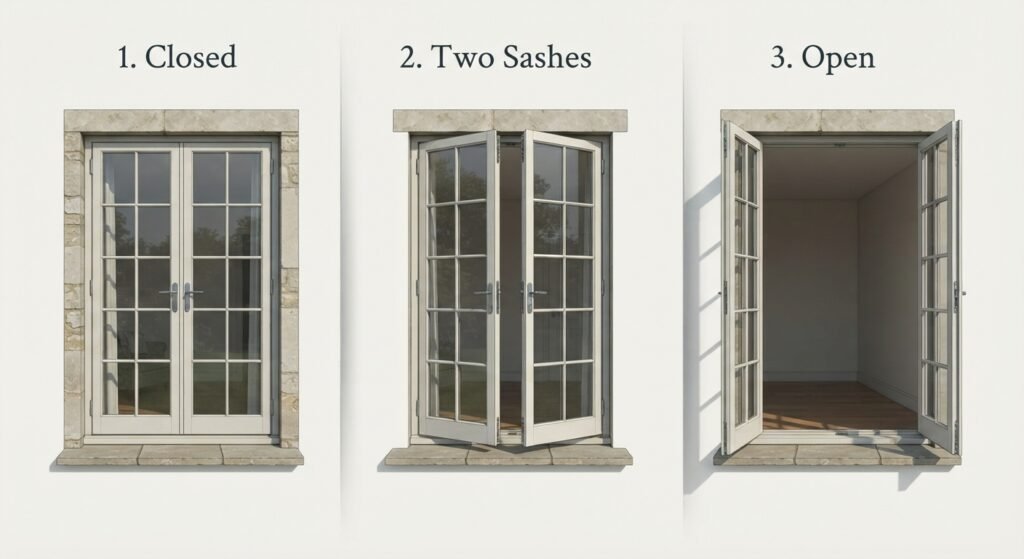
If you’re wondering what do French windows look like, picture two tall windows sitting side by side with a balanced, symmetrical design. They usually have large glass panes and narrow frames, which gives them a clean, open feel.
Traditional French style windows may have smaller panes divided by bars for a more classic look. On the other hand, a modern French window design often uses larger panes and slimmer framing. The overall French window style can be simple or decorative, but the paired panels are what give it that familiar look.
What Makes a Window a French Window?
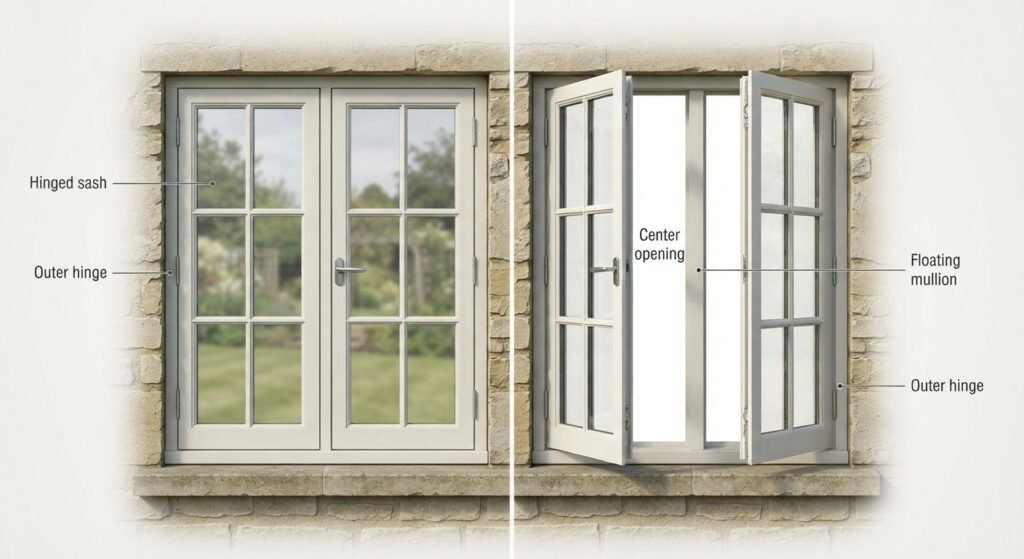
A few features set French casement windows apart from an ordinary casement window. They use a dual sash, with two paired sashes hinged at the outer edges. The panels meet near the middle and open away from each other, creating a wide center opening.
Many designs use a floating mullion or flying mullion instead of a fixed central mullion. When both sashes are open, the middle is mostly clear, giving you a more unobstructed opening and a cleaner view outside.
Are French Windows the Same as Casement Windows?
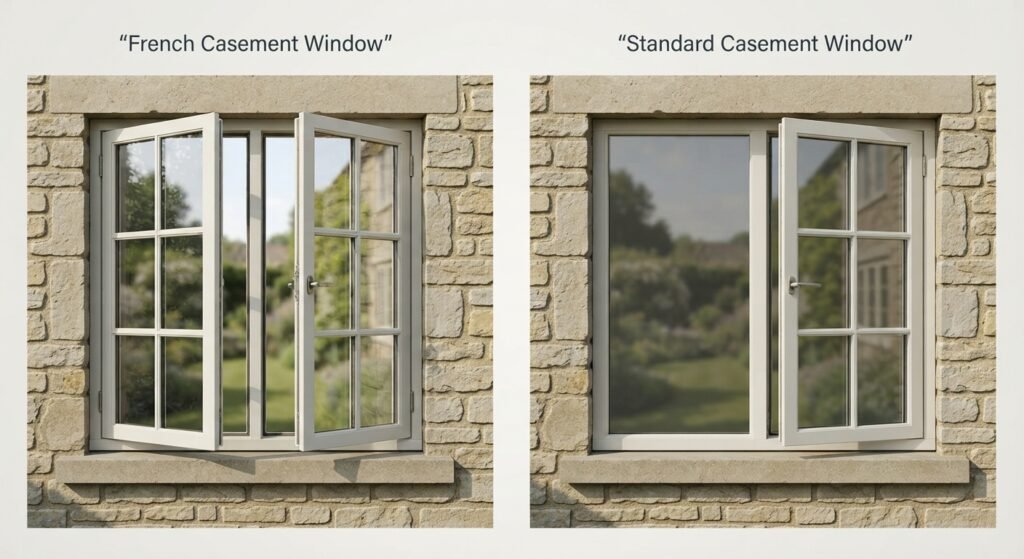
Not exactly. A French casement window is a type of casement window, but the two terms don’t mean the same thing. French casement windows normally have two sashes that meet in the middle, while a standard casement window can have just one opening sash.
| Feature | French Window | Standard Casement |
| Sashes | Usually two | One or more |
| Center opening | Key feature | Not always |
| Hinged | Yes | Yes |
| Wide clear opening | Common | Depends on design |
How Do French Windows Open?
French windows can open inward or outward, depending on the design, frame, and hardware. The hinged sashes usually swing away from the center, but there isn’t one opening direction that fits every French window.
Some designs are made as push out French casement windows, where the sashes open outward by hand. If you’re wondering how to open French windows, check the handle and hinges first, since the hardware can vary. Also, make sure there’s enough clearance on the inside or outside before opening them fully.
What Are French Windows Called?
If you’re wondering what are French windows called, you’ll often see the French term porte-fenêtre used for a tall, glazed opening that sits somewhere between a traditional window and a door. The term can vary a little depending on the country, manufacturer, and design.
You may come across names such as French window, French casement, French door, or porte-fenêtre. They’re related terms, but they don’t always describe exactly the same type of opening.
How Do French Windows Open?
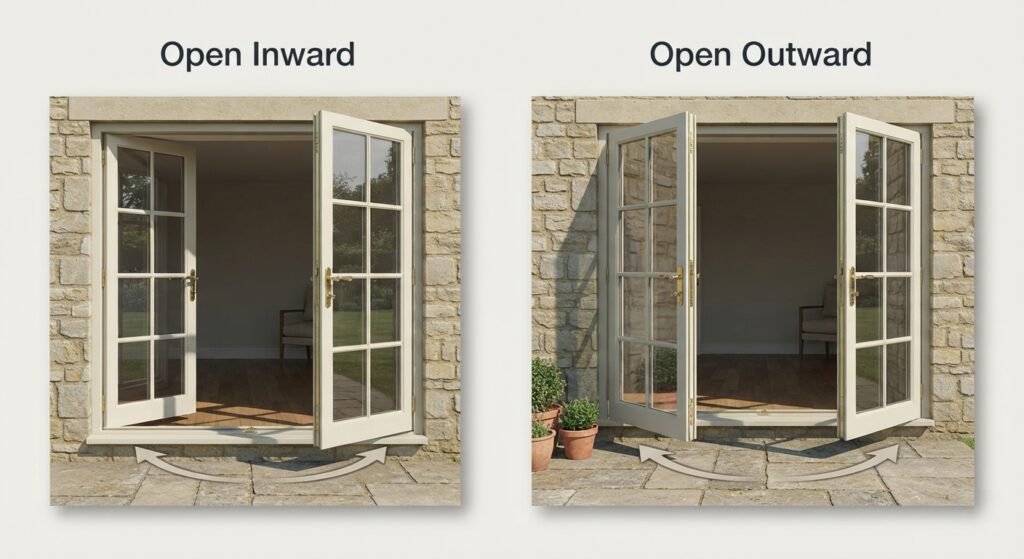
French windows can open inward or outward, depending on the window design and the hardware used. The two hinged sashes normally move away from the center, giving you a wider opening when both panels are open.
Some styles are made as push out French casement windows, which open outward with a simple push. If you’re wondering how to open French windows, start with the handle and check which way the hinges are set. Just make sure there’s enough room for the sashes to swing freely.
What Are French Windows Called?
So, what are French windows called in France? A common term is porte-fenêtre, which is used for a tall glazed opening that has some of the features of both a window and a door.
You may also see French windows called French casements, French doors, or porte-fenêtres. The wording isn’t always used in exactly the same way, though, so the actual design matters more than the name.
What Are French Pane Windows?
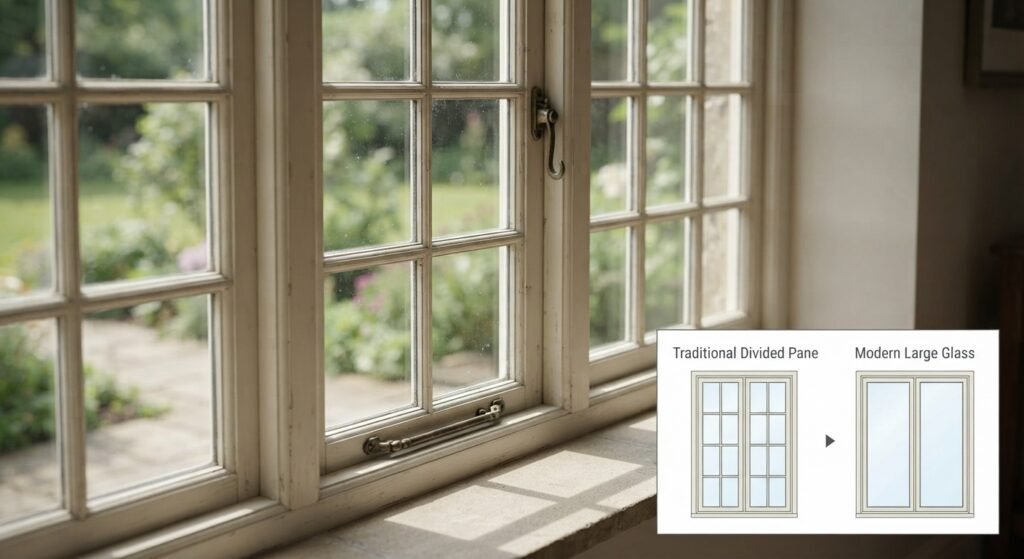
French pane windows are windows where the glass is split into several smaller sections instead of using one large pane. The divisions are usually made with glazing bars or muntins, giving the window a more traditional look.
So, what are French pane windows really? They’re simply a pane-style version of the French window design. They work especially well in period homes, while modern versions can use simulated divisions to keep the classic look without as many separate glass panes.
Where Are French Windows Commonly Used?
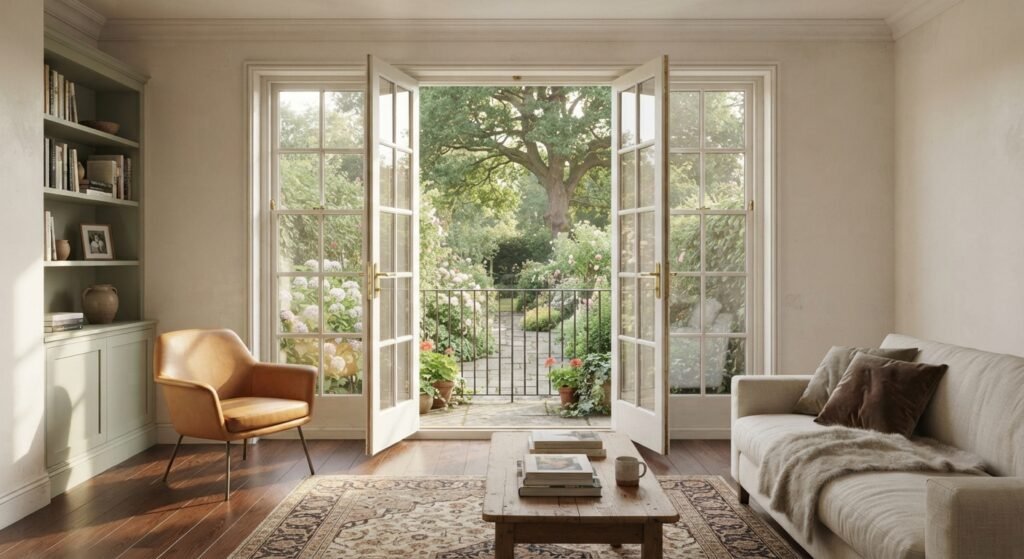
French windows for living rooms are a popular choice because they can bring in more daylight while keeping the room connected to the outdoors. They’re also useful in rooms facing gardens, where garden views are a big part of the appeal.
You’ll also find French windows for balconies, including openings onto a Juliet balcony. On upper floors, they can add a tall, elegant look while giving the room more light and a better outside view.
Why Do People Choose French Windows?
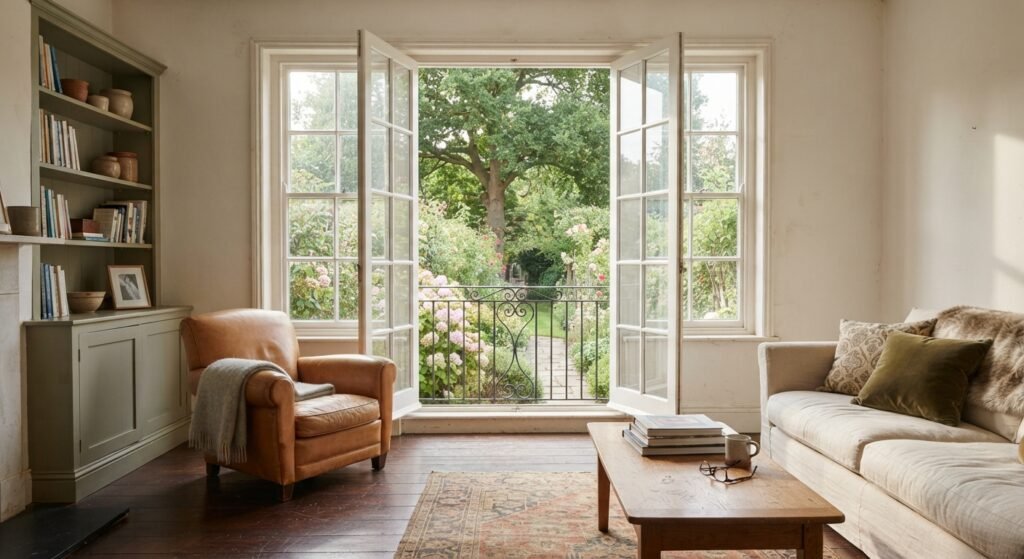
The main French window benefits come down to light, airflow, and the way they open up a room. Large glass areas can bring in more natural light, while opening both panels allows fresh air and better ventilation.
They can also give you wider, more unobstructed views of a garden or balcony. On the style side, the classic design works well with older homes, while simpler frames can suit modern spaces. That mix of looks and function also creates a nice indoor outdoor connection.
What Should You Consider Before Choosing French Windows?
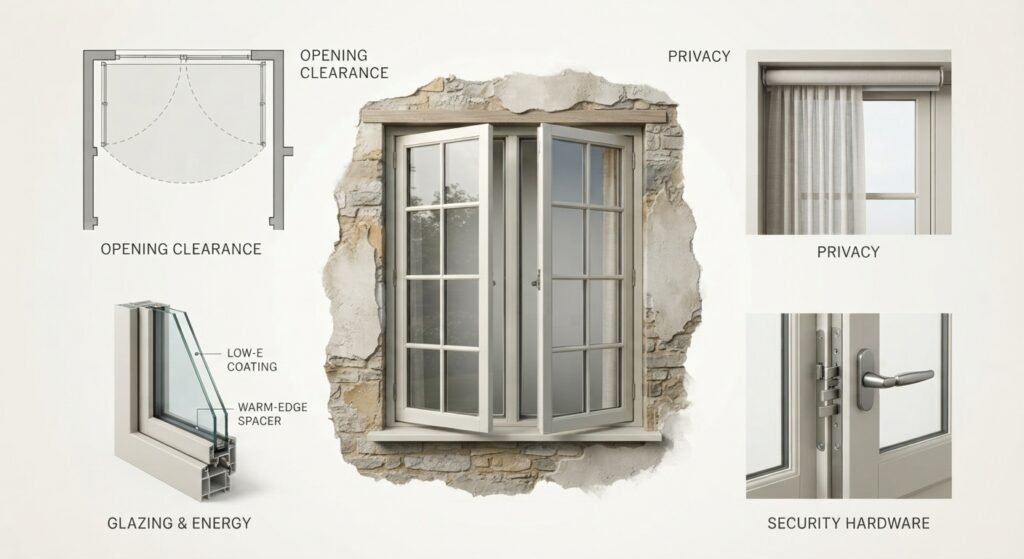
Before choosing a French window design, think about how the window will actually work in your room. The hinged panels need enough window clearance to open properly, and large glass areas can affect privacy.
A few other things matter too:
- Energy efficiency: Check the glazing, frame, seals, and installation.
- French window security: Look at the locks, hinges, glazing, and frame quality.
- French windows cost: Size, material, glazing, hardware, and installation can all change the final price.
- Window hardware: Handles, hinges, and locking systems should match the window and how often you plan to use it.
The right setup is really about balancing appearance with how you use the space every day.
Are French Windows a Good Choice for Every Home?
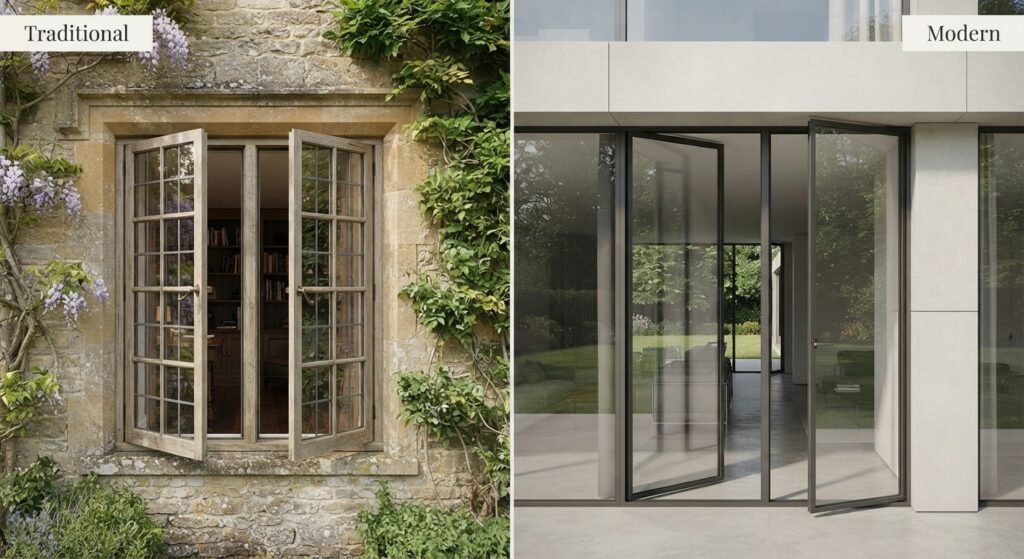
French windows for home can be a great pick if you want plenty of light, good airflow, outdoor views, and a classic look. A French window design with two opening panels also gives the room a wider, more open feel.
French style windows can work well in both older and newer properties. Traditional French windows suit period homes, while modern French windows with larger glass areas and slimmer frames can fit a cleaner, contemporary space.
They may not be the best choice if:
- Space is too tight for the panels to swing open
- You specifically want a sliding window
- You need a wide walk-through opening
- Privacy is more important than having large glass areas
Frequently Asked Questions
What Is a French Window?
A French window is a paired casement-style window with two sashes that meet in the center. Both panels can open away from the middle, creating a wider opening.
What Are French Windows Called?
They’re commonly called French casement windows in English. In France, you may also come across the term porte-fenêtre for tall glazed openings that sit between a window and a door.
What Do French Windows Look Like?
They usually have two matching panels, tall proportions, and plenty of glass. Some have smaller divided panes, while modern designs often use larger panes and slimmer frames.
Are French Windows the Same as Casement Windows?
Not quite. A French window is a type of casement window, but it normally has two sashes that open from the center. Standard casement windows can have a single opening sash.
What Are French Casement Windows?
French casement windows are windows with two hinged sashes that meet in the middle. When both are opened, they create a wide, mostly clear opening.
What Are French Pane Windows?
French pane windows have glass divided into smaller sections using glazing bars or muntins. This gives them a more traditional appearance.
Why Are French Windows Called French Windows?
The name comes from the style’s strong connection with French architecture. However, the design has older European roots and wasn’t simply invented in France.
Do French Windows Open Inward or Outward?
They can do either. It depends on the frame, hinges, hardware, and the specific design. Some are made as outward-opening push-out windows.
Are French Windows the Same as French Doors?
No. They can look very similar, but French doors are built for people to walk through, while French windows are mainly designed as windows for light, airflow, and views.
Can French Windows Be Used on Upper Floors?
Yes. They’re often used on upper floors, including rooms facing balconies or Juliet balconies. The design just needs to suit the opening, safety requirements, and building.
Conclusion
So, what are French windows? They’re paired casement-style windows with two hinged sashes that meet at the center and open away from each other. This setup gives you a wider opening, more natural light, fresh air, and clearer outdoor views without a fixed center post getting in the way.
They can look quite similar to French doors, but the purpose is different. French doors are made for regular walk-through access, while French windows are mainly used as windows. Whether they’re a good fit depends on your available space, opening clearance, privacy needs, and the overall French window design you want for your home.